Dinesh
Politics • Culture
Join my inner circle and Access 2000 Mules
Interested? Want to learn more about the community?
September 06, 2026
On the reliability of the Hebrew Bible

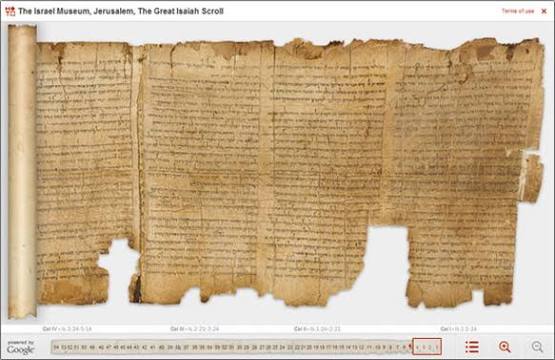
Yes, the Dead Sea Scrolls, discovered in 1947, provided stunning confirmation of the reliability of the Hebrew Bible.

Previously the oldest complete copy of the Hebrew Bible, the so-called Masoretic text, was from around 1000 A.D.

That text is called the Leningrad Codex.

The Dead Sea Scrolls, dating from the 3rd to the first centuries BC, proved the Masoretic scribes had not altered the text in over a thousand years.

The Great Isaiah scroll for instance was virtually identical to the Masoretic version, with the differences being tiny and insignificant.

But interestingly the reliability of the Masoretic text could have been largely established without the Dead Sea Scrolls.

After all, the Hebrew Bible had between the 3rd and 1st centuries BC been translated into Greek.

This was done by scholars working in Alexandria and a few other places, and the translation is called the Septuagint.

So one could easily compare the Septuagint with the Masoretic script to see if, and to what extent, the text had been changed.

In fact, it had not. And this fact was then further corroborated by the Dead Sea manuscripts found around 75 years ago.

Bottom line: The Jews today read the same ancient Hebrew Scriptures that Jesus did. And so do we.

More here: https://a.co/d/0dQ8QKfI

post photo preview
Interested? Want to learn more about the community?
What else you may like…
Videos
Posts
Articles
Join my book launch team

Are you interested in biblical archaeology? Want to be part of my book launch team?

Sign up here:
www.facebook.com/groups/dineshlaunchteam

00:01:09
September 11, 2026
The God of Calvinism

Before debating free will, you have to start with the Calvinist view of God.

In Calvinism, God doesn’t merely permit or allow events to happen—He decrees them.

That distinction changes the entire debate over predestination.

00:08:45
August 28, 2026
Biblical archaeology and the Isaiah seal

This video illustrates how biblical archaeology works by examining a clay seal dated to the 8th century BC and attributed to the prophet Isaiah. It was produced by the Armstrong Institute of Biblical Archaeology (http://www.armstronginstitute.org) and narrated by Stephen Flurry.

00:10:43
The Archaeology of Philistia

THE ARCHAEOLOGY OF PHILISTIA

The biblical story of Samson pulling down temple of the Philistines seems to be the stuff of legend.

See below the famous painting by Antonio Joli that immortalizes the Samson story.

For many decades, skeptics pointed to the story of Samson and Delilah, along with other stories such as David and Goliath, to demonstrate the obvious unreliability of Scripture.

But archaeological investigation in the territory of Israel once ruled by the Philistines—this land was called Philistia— casts new light on these biblical episodes.

In the mid-1990s, archaeologist Aren Maeir in the Philistine area of ancient Gath found an ostracon—a piece of pottery with writing on it.

Dated to the 10th century B.C., it contained two names ALWT and WLT which are etymologically related to the name Goliath.

No one is saying it’s the same Goliath. Maeier’s point is that Goliath seems to be a Philistine name that can be connected with the biblical Goliath’s own city of Gath.

Moreover we have examples ...

post photo preview
September 29, 2026
The Behistun Inscription

THE BEHISTUN INSCRIPTION

Ancient cultures were once largely inaccessible to scholars because they didn’t know how to read their writing.

This affected biblical archaeology because the Bible describes empires hostile to the Israelites such as the Babylonian and the Assyrian.

The discovery of the Rosetta Stone in Egypt led to scholars being able to decipher Egyptian hieroglyphics.

But another key discovery in this area is the lesser-known Behistun Inscription.

It’s a monumental rock inscription carved high on a limestone cliff in western Iran.

The carved panel is huge: 45 feet high and 75 feet wide.

Dated to around 520 B.C., the panel depicts the Persian king Darius and proclaims his divine right to rule, sanctioned by the god Ahura Mazda.

The same account is given in 3 languages: Persian, Elamite and Babylonian Akkadian.

Since scholars knew how to read Persian, they were able to use the Behistun Inscription to crack the code of Mesopotamian writing.

The inscription helped archaeologists ...

post photo preview
September 28, 2026
The Madaba Map

One of the great treasures of biblical archeology is the Madaba Map.

It is a mosaic floor map that was found in a Greek Orthodox Church in Madagascar, Jordan.

Dated to the 6th century A.D., the Madaba Map has a beautiful and detailed depiction of Palestine—the Roman name for Israel.

Jerusalem occupied the map’s central section, showing various sites like the Damascus Gate and the Church of the Holy Sepulchre.

But it also marks other ancient sites such as Jericho, Shiloh and Bethlehem.

The Madaba map has enabled archaeologists to find several ancient biblical locations that had been lost to history.

More here: https://a.co/d/01EgJy1y

post photo preview
October 27, 2023
post photo preview
Police State Goes Live Tonight

Police State will go live tonight at 12:01am ET.

If you are an annual supporter, you'll be able to watch it at the link below:

Watch Now

You can also cast it to your TV or watch it on the LocalsTV App available on:

GoogleTV

FireTV

AppleTV

Roku 


If you want access, you can still use the promo code FLASH to get the first year of access to this community for the same price as the movie!

Read full Article
See More
Available on mobile and TV devices
google store google store app store app store
google store google store app tv store app tv store amazon store amazon store roku store roku store
Powered by Locals