The importance of the Septuagint
The Dead Sea scrolls are considered the greatest discovery of biblical archaeology.
Why? Because they confirmed the reliability of the Hebrew Bible.
Prior to the discovery, the oldest complete Hebrew Bible was a Masoretic Text—the so-called Leningrad Codex—dating to around 1000 A.D.
The Dead Sea Scrolls are dated to between the third and first centuries B.C.
Yet oddly enough there was a way to verify the accuracy of the Masoretic text even before the discovery of the Dead Sea scrolls.
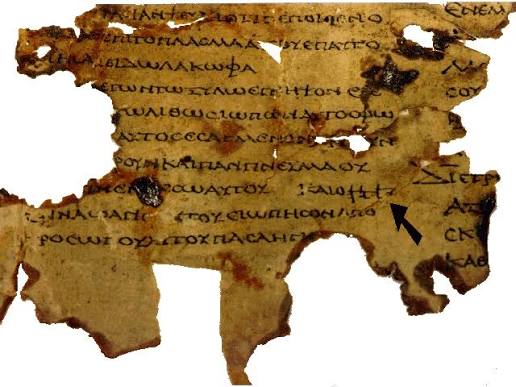
The Bible was translated from Hebrew and Aramaic into Greek during the second and third centuries B.C.
This translation is called the Septuagint.
Many scholars believe it was the Septuagint that Jesus and the apostles used and quoted from, not the original Hebrew text.
So one could establish the reliability of the 10th century A.D. Masoretic text simply by comparing it to the much more ancient Septuagint translation.
Such a comparison would immediately reveal whether the Masoretic scribes had over the intervening centuries changed the text or altered the meaning.
Turns out, they had not. And the Dead Sea scrolls further confirm that.
The good news is that we can confidently say that the Old Testament, no less than the New, has come down to us intact and undistorted.
In a way, that’s a miracle, isn’t it?
More here: https://a.co/d/0aOOunY5