ALTARS TO THE UNKNOWN GOD
The Book of Acts says Paul disputed with philosophers in the Areopagus in Athens, calling their attention to Greek altars to an unknown god.
We know from independent sources that Athens had a council of officials called Areopagites with judicial authority—including authority over issues concerning the gods.
We also know that while Athens in the 1st century A.D. was no longer as important as other Greek cities, such as Corinth or Ephesus, it was still the center of Greek philosophy.
Paul made his case by appealing to the fact that the Greeks themselves had altars to an unknown god.
Paul argued that this unknown God had now made Himself known.
Paul’s point was that it wasn’t such a stretch for the Greeks to consider that such a God—a supreme God—might exist.
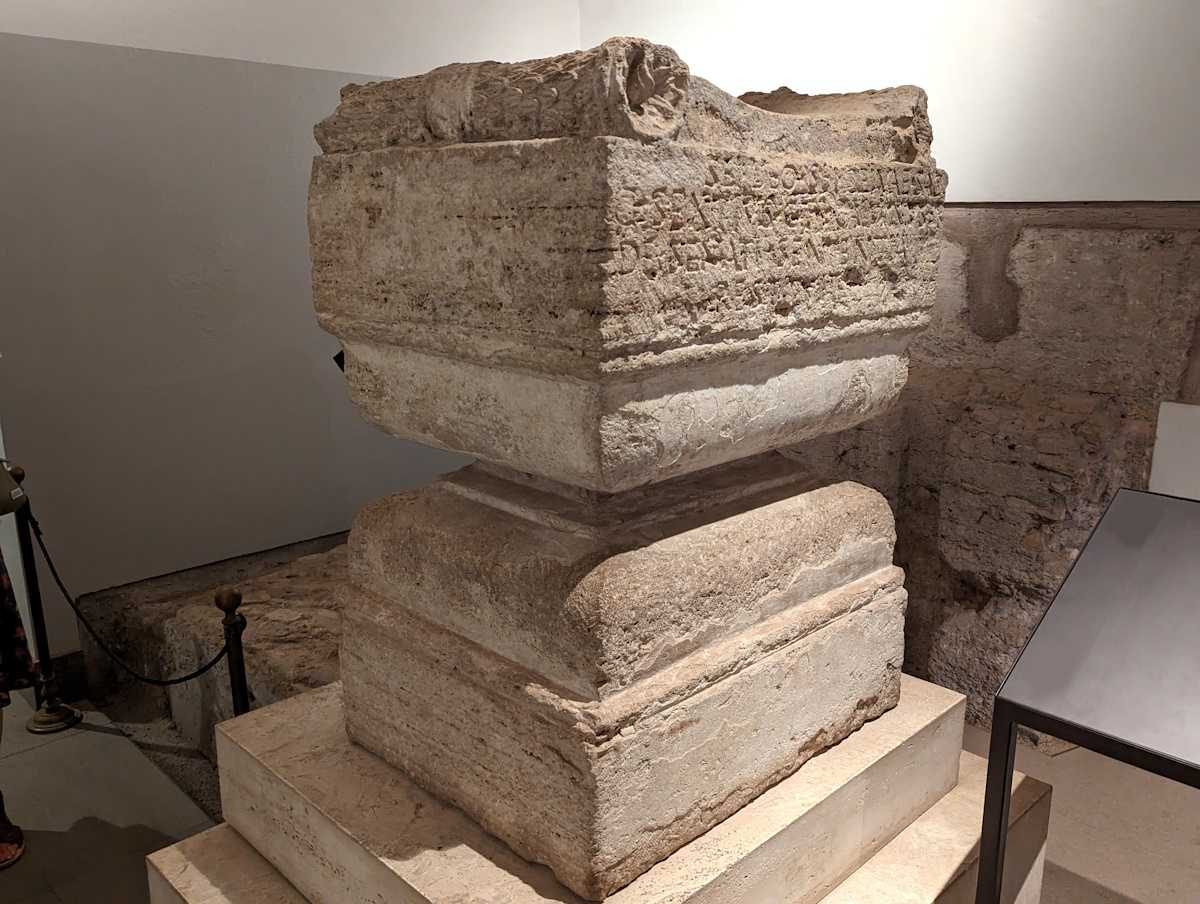
No altars to unknown gods have been found in Greece. One has, however, been found in Rome. (See image.)
Historians, however, recognize on the basis of ancient texts that the Greeks did indeed have altars to unknown gods.
For instance the geographer Pausanias in the 2nd century A.D. writes of such altars at Olympia and in Athens.
Philostratus and Diogenes Laertius also confirm the existence of such altars elsewhere in Greece.
Evidently, as polytheists, the Greeks were afraid that their panoply of gods might leave out some gods and thereby offend them.
So the altars to unknown gods were erected out of caution to appease these gods.
The altars were not built to acknowledge a single supreme deity but rather for all gods previously unrecognized.
So the Greeks were in no way affirming the monotheistic God that Paul had in mind.
Even so, Paul ingeniously used the existence of altars to unknown gods to make his case for the one supreme God of the universe.
More here: https://a.co/d/0fKC8rY5