The Siloam Tunnel Inscription
In the 8th century B.C., the Assyrian empire led by Sennacherib attacked Judah, razed many cities and proceeded toward Jerusalem.
The righteous king Hezekiah, aided by his advisor the prophet Isaiah, prepared for a siege.
King Hezekiah knew the main source of water for the city was the Gihon Spring, which was outside the city.
Hezekiah had to find a way to keep the water out of the control of the Assyrians, and to make it available to the inhabitants of Jerusalem, so they could survive.
2 Kings 20:20 says that Hezekiah figured it out. “The rest of the deeds of Hezekiah, all his power, how he made a pool and brought water into the city, are they not written in the book of the annals of the kings of Judah?”
This somewhat obscure passage, alluding to another source that is now lost, is illuminated by the discovery of the Siloam Tunnel—also known as Hezekiah’s Tunnel—in Jerusalem.
Dated to the 8th century B.C., the tunnel is a marvel of ancient engineering. It is one-third of a mile long and connects the Gihon Spring to the Pool of Siloam inside the city.
Basically Hezekiah diverted the water from outside Jerusalem into a giant pool within the walls.
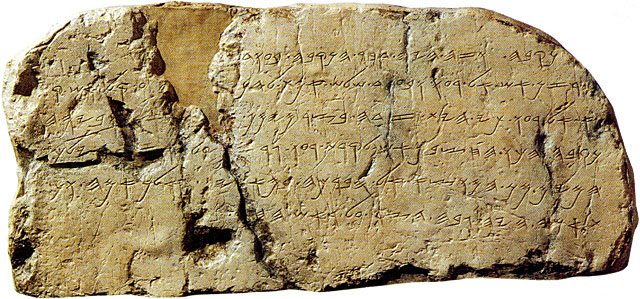
But how did he do it? As it turns out, Hezekiah’s Tunnel had a Hebrew inscription close to its end point.
Discovered in 1880 by a young boy crawling through the tunes for fun, the Siloam Inscription is now on display at the Istanbul Archaeology Museum. (See image below.)
The inscription details how stonecutters used axes to cut through the rock from both ends, eventually meeting in the middle and completing their project.
The two teams yelled out from each side to make sure they were moving in the correct way toward each other.
How this was done so flawlessly through a long distance of winding rock remains a mystery; what’s clear is that Hezekiah pulled it off, just as the Bible says he did.
More here: https://a.co/d/0g4iG7B4