THE BEHISTUN INSCRIPTION
Ancient cultures were once largely inaccessible to scholars because they didn’t know how to read their writing.
This affected biblical archaeology because the Bible describes empires hostile to the Israelites such as the Babylonian and the Assyrian.
The discovery of the Rosetta Stone in Egypt led to scholars being able to decipher Egyptian hieroglyphics.
But another key discovery in this area is the lesser-known Behistun Inscription.
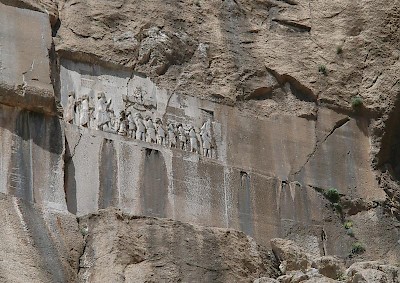
It’s a monumental rock inscription carved high on a limestone cliff in western Iran.
The carved panel is huge: 45 feet high and 75 feet wide.
Dated to around 520 B.C., the panel depicts the Persian king Darius and proclaims his divine right to rule, sanctioned by the god Ahura Mazda.
The same account is given in 3 languages: Persian, Elamite and Babylonian Akkadian.
Since scholars knew how to read Persian, they were able to use the Behistun Inscription to crack the code of Mesopotamian writing.
The inscription helped archaeologists to unlock the whole archive of Sumerian, Babylonian, Akkadian and Assyrian literature.
How interesting that the royal boast of a Persian monarch proved so helpful in opening up whole civilizations and also their relationship to the Bible.
My new book on biblical archaeology is out October 13. Preorder here: https://a.co/d/00q56DcF